ॐ
Hayagriva Madhava Temple, Hajo
Vishnu (Hayagriva Madhava) · Hajo, Assam
॥ ॐ नमो नारायणाय ॥
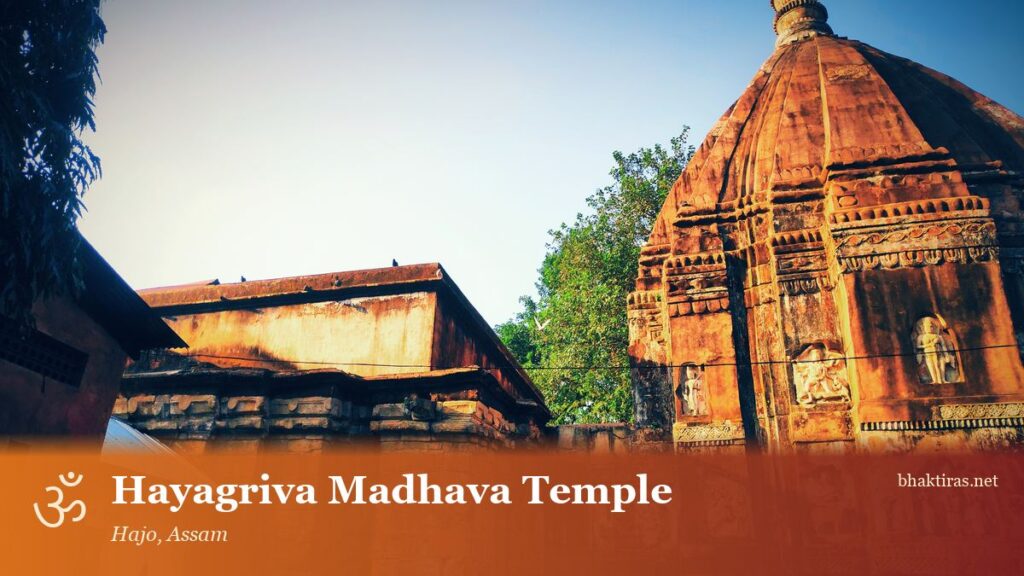
On the Monikut hill at Hajo in Assam stands the Hayagriva Madhava Temple, an ancient stone shrine of Vishnu in his horse-headed form, Hayagriva, restorer of the lost Vedas. Sacred to Hindus and revered by Buddhists who hold it among their own holy places, the temple is a rare meeting-ground of faiths above the Brahmaputra plains.
The horse-headed lord
Hayagriva is the form Vishnu took to recover the Vedas stolen by demons and to restore sacred knowledge to the world, shown with the head of a horse. At Hajo the dark stone image of Hayagriva Madhava is worshipped in a sanctum of great age, set on the Monikut hill among carved stone and stepped tanks.
A shrine of two faiths
The temple is held sacred not only by Hindus but by many Buddhists, especially of the Himalayan lands, some of whom revere the hill as a place connected with the Buddha; the syncretic devotion that gathers here makes Hajo one of the more unusual pilgrimage sites of the northeast. Carvings of elephants and figures adorn the old stone walls.
Stone of the Assam kings
The present temple was built and renewed across the centuries, with major work under the Koch and Ahom kings, on a site traced in tradition far older. Its festivals follow the Vaishnava calendar of Assam — Janmashtami and the spring Doul (Holi) among them — and the climb to the hilltop shrine rewards the pilgrim with wide views over the river country.
How to reach the temple
- By road: Hajo is about 24 km northwest of Guwahati in Kamrup district.
- By train: Guwahati is the nearest major railhead.
- By air: Lokpriya Gopinath Bordoloi International Airport, Guwahati, is about 30 km away.
Frequently Asked Questions
Who is Hayagriva?
Hayagriva is the horse-headed form of Vishnu who recovered the Vedas stolen by demons and restored sacred knowledge to the world; he is worshipped at Hajo as Hayagriva Madhava.
Why is the temple sacred to two faiths?
The temple is revered by Hindus and by many Buddhists, especially of the Himalayan lands, some of whom connect the hill with the Buddha — making Hajo a rare meeting-ground of faiths.
Where is the temple?
It stands on the Monikut hill at Hajo, about 24 km northwest of Guwahati in Kamrup district, Assam.
Who built the temple?
The present stone temple was built and renewed across the centuries, with major work under the Koch and Ahom kings, on a site held to be far older.
What are the main festivals?
Janmashtami and the spring Doul (Holi) are among the chief festivals, following the Vaishnava calendar of Assam.
How do I reach Hajo?
Hajo is about 24 km from Guwahati, the nearest major railhead; Guwahati airport is about 30 km away.
॥ जय हयग्रीव माधव ॥ • Bhaktiras.net Temple Guide
| Deity | Vishnu as Hayagriva Madhava (horse-headed) |
| Setting | Monikut hill, Hajo |
| Significance | Sacred to Hindus; revered by Buddhists |
| Builders | Koch and Ahom kings (on an older site) |
| River | Brahmaputra plains |
| Main Festival | Doul (Holi), Janmashtami |
Related Temples
Explore more sacred temples connected by deity and region.