ॐ
Chennakeshava Temple, Belur
Vishnu • Belur, Hassan, Karnataka
॥ ॐ नमो भगवते वासुदेवाय ॥
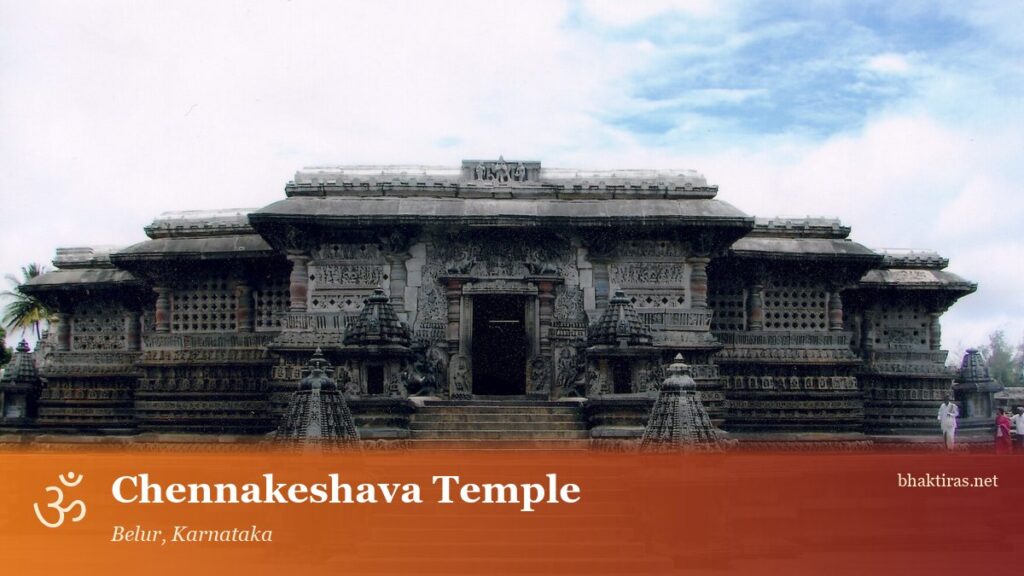
The Chennakeshava Temple at Belur is a Hoysala masterpiece begun in 1117 under King Vishnuvardhana, on the Yagachi river in Karnataka. Carved from soapstone and dedicated to Vishnu as Chennakeshava, it is covered in intricate friezes and the celebrated madanika bracket figures. In 2023 it was inscribed as a UNESCO World Heritage Site, and it remains an active temple.
A Hoysala temple of 1117
The temple was begun in 1117 under the Hoysala king Vishnuvardhana, set beside the Yagachi river at Belur. Work on its sculpture continued long after, reflecting decades of royal patronage.
It is dedicated to Vishnu as Chennakeshava, a name meaning ‘the handsome Keshava’, and the temple was the dynastic shrine at the heart of the Hoysala capital.
Soapstone and its sculpture
The temple is carved from soft soapstone, a material that allowed the Hoysala sculptors to work in extraordinary detail. Its walls are covered in friezes of elephants, riders, scenes from the epics and bands of ornament.
This density of carving is the signature of Hoysala art, and Belur is among its most complete surviving examples.
The madanika figures and Narasimha pillar
Among the temple’s most admired works are the madanika bracket figures — celestial maidens carved beneath the eaves in poses of dance and daily life. Each is treated as an individual study in stone.
Inside stands the famous Narasimha pillar, decorated with fine sculpture and long noted for the skill of its carving among the temple’s many ornamented columns.
UNESCO heritage and worship
In 2023 the Chennakeshava Temple was inscribed as a UNESCO World Heritage Site as part of the Sacred Ensembles of the Hoysalas. It remains an active temple where worship of Vishnu continues alongside its status as a monument.
- Location: Belur, Hassan district, Karnataka
- Deity: Vishnu as Chennakeshava
- Built: begun 1117 under Vishnuvardhana
- Material: soapstone
- UNESCO: inscribed 2023 (Sacred Ensembles of the Hoysalas)
Frequently Asked Questions
Who built the Chennakeshava Temple at Belur?
The temple was begun in 1117 under the Hoysala king Vishnuvardhana. Work on its sculpture continued for decades under later Hoysala patronage.
Which deity is worshipped at Belur’s Chennakeshava Temple?
It is dedicated to Vishnu in the form of Chennakeshava, meaning ‘the handsome Keshava’. It was the dynastic shrine of the Hoysalas.
What are the madanika figures?
The madanika are celestial maiden bracket figures carved beneath the temple’s eaves in poses of dance and daily life. They are among the most admired sculptures at Belur.
What material is the temple made of?
The temple is carved from soapstone, a soft stone that let Hoysala sculptors achieve extremely fine detail. Its walls are covered in dense friezes and ornament.
Is the Chennakeshava Temple a UNESCO World Heritage Site?
Yes. It was inscribed in 2023 as part of the Sacred Ensembles of the Hoysalas. It remains an active temple where worship continues.
Where is the Chennakeshava Temple located?
It is at Belur in the Hassan district of Karnataka, on the Yagachi river.
॥ जय श्रीमन्नारायण ॥ • Bhaktiras.net Temple Guide
| Deity | Vishnu (Chennakeshava) |
| Style | Hoysala |
| Built | Begun 1117 |
| Patron | Vishnuvardhana |
| Material | Soapstone |
| Famous for | Madanika figures, Narasimha pillar |
| UNESCO | Inscribed 2023 |
| Location | Belur, Hassan |
Related Temples
Explore more sacred temples connected by deity and region.