
ॐ
Lepakshi Veerabhadra Temple
Veerabhadra (Shiva) • Lepakshi, Andhra Pradesh
॥ ॐ नमः शिवाय ॥
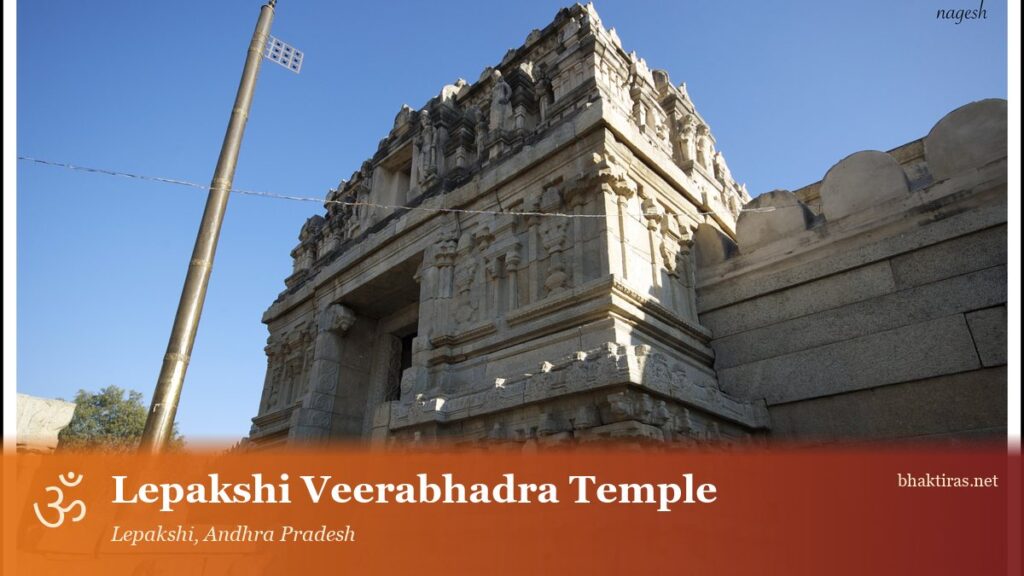
The Veerabhadra temple at Lepakshi is a Vijayanagara-era shrine raised on a low granite outcrop called Kurma Saila, dedicated to Veerabhadra, the fierce form of Shiva born from his wrath. Built around 1538 by the brothers Virupanna and Viranna, it draws visitors for its painted ceilings, its famous hanging pillar, and the colossal Nagalinga carved from a single boulder.
A shrine on the tortoise rock
Lepakshi sits in the Sri Sathya Sai district of Andhra Pradesh, where the temple rises on a granite hillock shaped like a tortoise, giving it the name Kurma Saila. The hard rock itself became the floor, the walls, and many of the carvings, so the building feels grown from the stone rather than set upon it.
The central deity is Veerabhadra, the wrathful warrior form Shiva created to destroy the sacrifice of Daksha. Alongside him the complex holds shrines to Shiva as Papanatheswara, to Vishnu, and to other forms, making the visit a circuit through several sanctums rather than a single hall.
Built by two brothers in 1538
Tradition credits the temple to Virupanna and Viranna, brothers who served as treasurers under the Vijayanagara administration and built much of what stands today around 1538. The work reflects the confident, ornament-heavy style of that empire at its height.
An unfinished Kalyana Mandapa, the marriage hall meant to host the wedding of Shiva and Parvati, stands open to the sky with carved pillars but no roof. Local memory ties its incomplete state to a story of Virupanna falling out of royal favour before the work could be closed.
The hanging pillar and the painted ceilings
One pillar in the main hall rests so lightly that a thin sheet of cloth can be passed beneath its base, earning it the name the hanging pillar. It is one of the most-photographed features of the site and a common test for curious visitors.
Above, the ceilings carry some of the largest surviving Vijayanagara frescoes, painted in earthy reds, ochres and blacks. A vast mural of Veerabhadra spreads across one ceiling, surrounded by panels of deities, processions and donors that record the dress and ornament of the period.
- Hanging pillar that barely touches the floor
- Large fresco of Veerabhadra on the ceiling
- Unfinished open-air Kalyana Mandapa
The monolithic Nagalinga and the giant Nandi
Behind the temple a huge Nagalinga has been cut from a single rock, a Shiva linga shielded by the multiple hoods of a coiled serpent. Carvers are said to have shaped it from one boulder while waiting for a meal, and its scale still surprises first-time visitors.
A short distance away in the village stands a separate monolithic Nandi, the bull mount of Shiva, also carved from one stone and counted among the largest of its kind. Set apart from the temple, it faces back toward the Nagalinga across the open ground.
Frequently Asked Questions
Who is the main deity at Lepakshi temple?
The main deity is Veerabhadra, a fierce form of Shiva created from his anger to destroy Daksha’s sacrifice. The complex also has shrines to other forms of Shiva and to Vishnu.
When was Lepakshi Veerabhadra temple built?
It was built around 1538 during the Vijayanagara period. The brothers Virupanna and Viranna, officials of the empire, are credited with its construction.
What is the hanging pillar at Lepakshi?
The hanging pillar is a column in the main hall whose base rests so lightly on the floor that a thin cloth can be slid underneath it. It is one of the temple’s best-known features.
Why is the Kalyana Mandapa unfinished?
The marriage hall was left without a roof and stands open to the sky. Local tradition links its incomplete state to the builder Virupanna losing royal favour before the work could be completed.
What is the Nagalinga at Lepakshi?
The Nagalinga is a large Shiva linga carved from a single boulder, sheltered by a coiled serpent with multiple hoods. It stands behind the main temple and is among the bigger monolithic carvings of its kind.
Where is Lepakshi temple located?
Lepakshi is in the Sri Sathya Sai district of Andhra Pradesh, in southern India. The temple sits on a low granite hill known as Kurma Saila within the village.
॥ हर हर महादेव ॥ • Bhaktiras.net Temple Guide
| Primary Deity | Veerabhadra (Shiva) |
| Established | c. 1538 |
| Builders | Virupanna and Viranna |
| Era | Vijayanagara |
| Location | Lepakshi, Andhra Pradesh |
| Hill | Kurma Saila |
| Known For | Hanging pillar, frescoes, Nagalinga |
| State | Andhra Pradesh |
Related Temples
Explore more sacred temples connected by deity and region.
 ShivaKapileswara Swamy Temple, Tirupati📍 Andhra Pradesh
 ShivaMallikarjuna Jyotirlinga Temple📍 Andhra Pradesh
 ShivaSrikalahasti Temple (Vayu Linga)📍 Andhra Pradesh
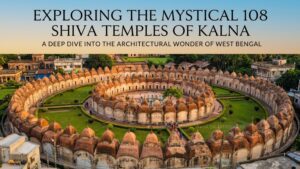 Shiva108 Shiva Temple, Kalna (Nava Kailash)📍 West Bengal
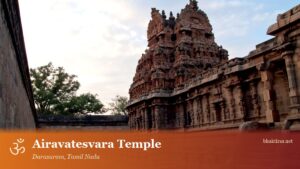 ShivaAiravatesvara Temple, Darasuram📍 Tamil Nadu
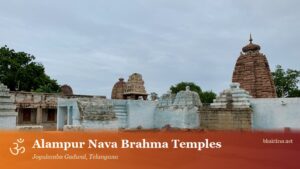 ShivaAlampur Nava Brahma Temples & Jogulamba📍 Telangana