
ॐ
Shyamrai Temple, Bishnupur
Krishna • Bishnupur, Bankura, West Bengal
॥ ॐ नमो भगवते वासुदेवाय ॥
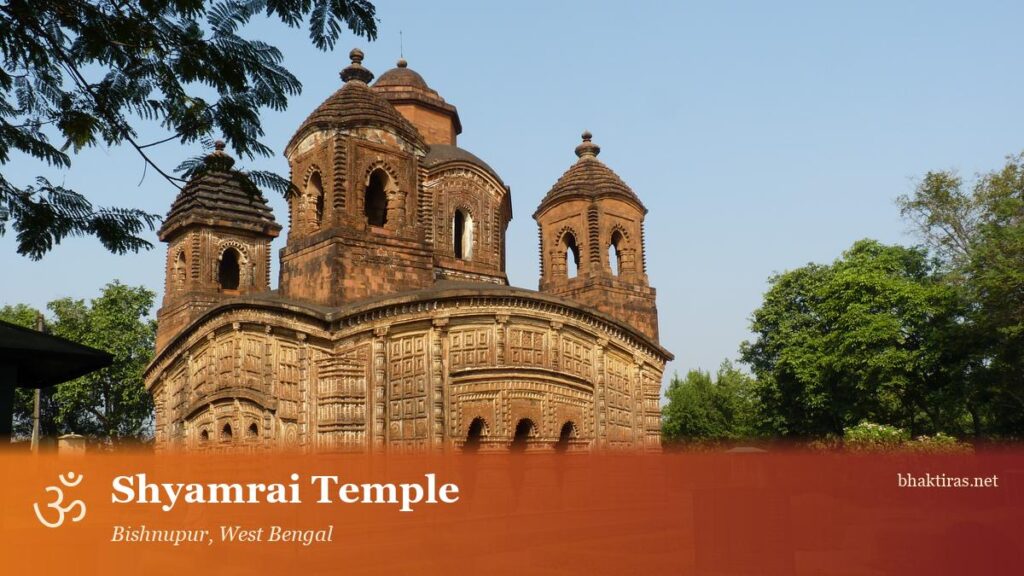
The Shyamrai Temple, also called the Pancha Ratna, is one of the five-towered brick shrines that made Bishnupur a landmark of Bengal’s terracotta architecture. Raised in 1643 by the Malla king Raghunath Singha, it pairs a square plan with five curved-roof pinnacles and walls dense with carved scenes of Krishna. The temple remains protected by the Archaeological Survey of India.
A five-towered terracotta landmark
Built in 1643 under Malla king Raghunath Singha, the Shyamrai Temple takes the pancharatna form: four corner towers around a taller central one, all rising from a square sanctum. The curved cornices echo the thatched Bengal hut translated into brick.
Because good building stone is scarce across the Bengal delta, the Malla craftsmen worked in fired clay. The result is a structure where the decoration is the surface itself — every exposed face is a field of moulded terracotta.
The carved walls
The brick panels carry an unusually detailed programme of Krishna-lila: the Ras-mandala, scenes from the god’s childhood, and episodes of devotion drawn from Vaishnava lore. Alongside these run hunting parties, marching soldiers and court processions.
This mix of the sacred and the everyday makes the walls a record of seventeenth-century Bengal as much as a devotional canvas. The fineness of the modelling is what sets Shyamrai apart even among Bishnupur’s temples.
Part of the Malla temple group
Shyamrai belongs to a cluster of brick temples the Malla rulers built when Bishnupur was their capital and a centre of Vaishnava worship. The town’s temples, tanks and the Bishnupur gharana of classical music together mark its cultural standing.
Visitors usually see Shyamrai as part of a wider Bishnupur circuit that includes the Jor Bangla, Rasmancha and Madan Mohan temples within a short distance.
Visiting and conservation
The temple is a centrally protected monument under the Archaeological Survey of India, which maintains the fragile terracotta surfaces. It sits within easy reach of Bishnupur’s other monuments and the town railway station.
- Location: Bishnupur, Bankura district, West Bengal
- Form: pancharatna (five-towered) brick temple
- Built: 1643, by Raghunath Singha
- Status: ASI-protected monument
Frequently Asked Questions
Who built the Shyamrai Temple and when?
The Shyamrai Temple was built in 1643 by the Malla king Raghunath Singha of Bishnupur. It stands among the finest terracotta temples raised during Malla rule in Bengal.
Why is it called the Pancha Ratna temple?
Pancha Ratna means ‘five jewels’, referring to the five towers — four at the corners and one in the centre — that crown the square temple. This pancharatna form is one of the classic temple types of Bengal.
Which deity is worshipped at the Shyamrai Temple?
The temple is dedicated to Krishna. Its terracotta panels are devoted largely to Krishna-lila, including the Ras-mandala and scenes from the god’s life.
What are the terracotta panels of Shyamrai known for?
They are known for their exceptional detail. The brick walls carry Krishna-lila, the Ras dance, and lively secular scenes of hunting, battle and courtly life, making them among the richest terracotta surfaces in Bishnupur.
Is the Shyamrai Temple protected?
Yes. It is a centrally protected monument maintained by the Archaeological Survey of India, which conserves its terracotta brickwork.
Where is the Shyamrai Temple located?
It is in Bishnupur, in the Bankura district of West Bengal. The temple sits within the cluster of Malla-era shrines that make Bishnupur a noted heritage town.
॥ राधे राधे ॥ • Bhaktiras.net Temple Guide
| Deity | Krishna |
| Type | Pancharatna terracotta temple |
| Built | 1643 |
| Patron | Raghunath Singha (Malla) |
| Material | Brick and terracotta |
| Towers | Five (pancharatna) |
| Protection | ASI monument |
| Location | Bishnupur, Bankura |
Related Temples
Explore more sacred temples connected by deity and region.
 KrishnaAntpur Radha Govinda Temple📍 West Bengal
 KrishnaISKCON Mayapur (Temple of the Vedic Planetarium)📍 West Bengal
 KrishnaJaydev Kenduli Temple (Joydev)📍 West Bengal
 KrishnaJor Bangla Temple, Bishnupur📍 West Bengal
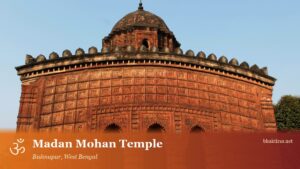 KrishnaMadan Mohan Temple, Bishnupur📍 West Bengal
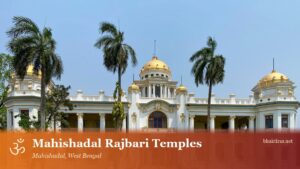 KrishnaMahishadal Rajbari Temples📍 West Bengal