ॐ
Harshnath Temple, Sikar
Lord Shiva • Harsh, Sikar, Rajasthan
॥ ॐ नमः शिवाय ॥
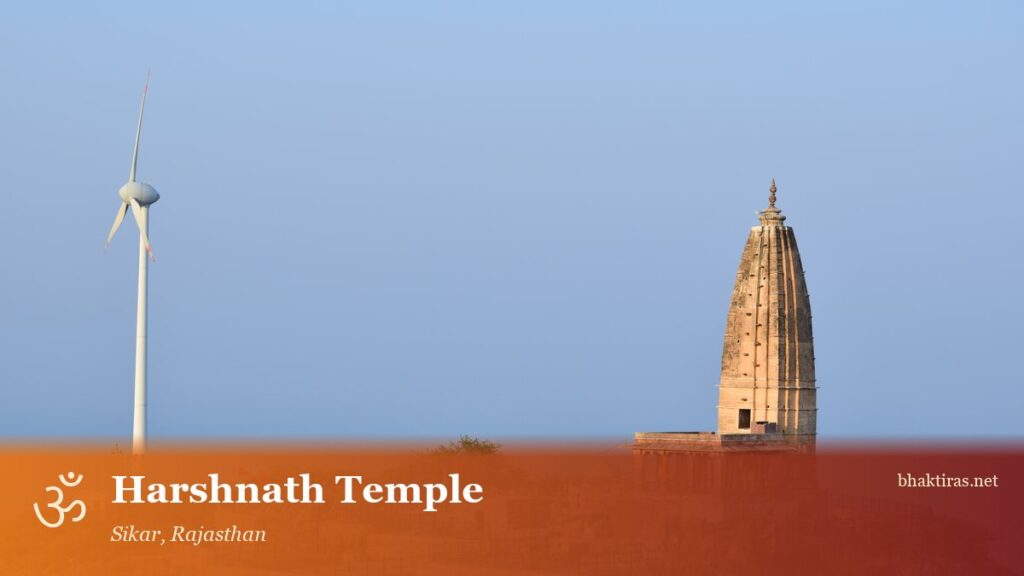
On Harsh Parvat near Sikar, the Harshnath temple is a 10th-century Shaiva site of the Chauhan period. A dated inscription points to around 973 CE, while the original temple now lies in carved ruins, with a later temple built nearby from its stones. Here Shiva is worshipped as Harshnath, a Bhairava form of the lord.
A 10th-century Shaiva site
The temple crowns Harsh Parvat, a hill near Sikar in the Shekhawati region of Rajasthan. It dates to the Chauhan period, and a surviving inscription points to a date of around 973 CE, placing it among the older Shaiva monuments of the area.
Shiva is venerated here as Harshnath, Harsha being understood as a Bhairava form of the lord. The hilltop setting gave the shrine both prominence and protection in earlier centuries.
Ruins and a later temple
The original 10th-century temple now stands in ruins, its carved stones — sculptures, pillars and panels — scattered and broken across the site, yet still showing the skill of its makers. These fragments are prized by visitors who study medieval Rajasthani temple art.
Beside the ruins a later temple was raised, in part from the stones of the old structure, so that living worship continues alongside the ancient remains.
Harshnath as Bhairava
The name Harshnath identifies Shiva in his Harsha or Bhairava aspect, a fierce and protective form. Devotion at the hill carries this character, set against the wider Shaiva worship of the region.
The shrine sits in a landscape dense with sacred associations, near the well-known Jeen Mata temple, so pilgrims often link the two in a single journey through the hills.
Visiting Harshnath
The temple is reached from Sikar town, the district headquarters, by road into the hills of Harsh Parvat. The climb rewards visitors with old sculptures and wide views over the surrounding country.
Carry water, wear sturdy footwear for the hill, and allow time to see both the ruins and the living temple. The nearby Jeen Mata shrine makes a natural addition to the trip.
- Location: Harsh Parvat, near Sikar
- Date: around 973 CE, Chauhan period
- Deity: Shiva as Harshnath (Bhairava form)
- Nearby: Jeen Mata temple
Frequently Asked Questions
Where is the Harshnath temple?
The Harshnath temple is on Harsh Parvat, a hill near Sikar in Rajasthan’s Shekhawati region. It is reached by road from Sikar town into the hills.
How old is the Harshnath temple?
It is a 10th-century Shaiva site of the Chauhan period, with a dated inscription pointing to around 973 CE. This places it among the older temple monuments of the area.
Who is Harshnath?
Harshnath is the form of Shiva worshipped here, with Harsha understood as a Bhairava aspect of the lord. The name gives the shrine its identity.
What can visitors see at the site?
The original 10th-century temple lies in carved ruins, with sculptures and stone fragments across the hill, while a later temple built nearby keeps worship alive. The hilltop also offers wide views.
Is there another temple to visit nearby?
Yes, the well-known Jeen Mata temple is close by, and pilgrims often combine the two in one journey. Both lie in the hills of the Sikar district.
How do I reach Harshnath?
Travel to Sikar town, the district headquarters, then continue by road into the hills of Harsh Parvat. Wear sturdy footwear and carry water for the climb.
॥ हर हर महादेव ॥ • Bhaktiras.net Temple Guide
| Primary Deity | Shiva (Harshnath, Bhairava form) |
| Location | Harsh Parvat, near Sikar |
| State | Rajasthan |
| Period | Chauhan, 10th century |
| Inscription Date | c. 973 CE |
| Condition | Original temple in ruins; later temple nearby |
| Nearby | Jeen Mata temple |
Related Temples
Explore more sacred temples connected by deity and region.