
ॐ
Tulsi Manas Mandir, Varanasi
Rama • Varanasi, Uttar Pradesh
॥ ॐ श्री रामाय नमः ॥
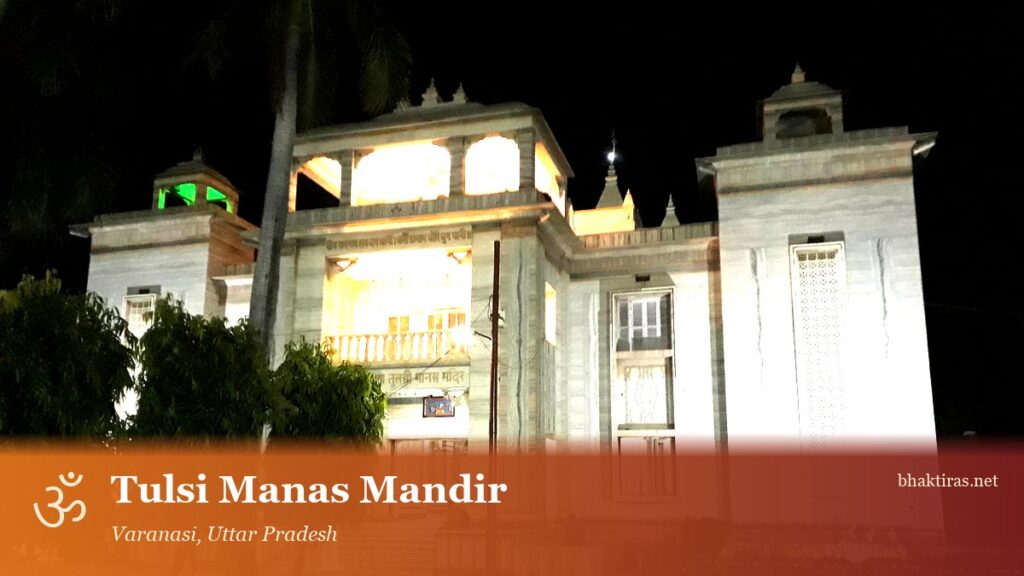
The Tulsi Manas Mandir is a white-marble temple in Varanasi raised at the spot where tradition places Goswami Tulsidas composing the Ramcharitmanas. Built in 1964, its walls are inscribed with verses of that beloved epic, turning the building itself into a reading of the text. With its Nagara spire and upper-floor diorama tableaux, it joins literature, devotion and craft in one place near the Sankat Mochan temple.
Where the Ramcharitmanas Was Composed
The temple takes its name and its purpose from Goswami Tulsidas, the sixteenth-century poet-saint whose Ramcharitmanas retold the Ramayana in Awadhi and carried Rama’s story into countless homes. Tradition associates this very site with the writing of that work.
By honouring the place of composition rather than an ancient idol, the temple celebrates a text as much as a deity. It treats the Ramcharitmanas as a sacred presence in its own right, the lens through which much of north India knows Rama.
Verses Written into the Marble
The most distinctive feature of the temple is its walls: passages of the Ramcharitmanas are engraved across the white marble, so that worship and reading become the same act. Visitors move along the verses as they circle the sanctum.
This inscription of an entire poem into the fabric of a building is rare among Indian temples and gives Tulsi Manas Mandir its scholarly, contemplative character. The marble surfaces keep the interior cool and bright, suiting long pauses over the text.
A Modern Temple in Nagara Style
Completed in 1964 by the Sureka family, the temple is a comparatively recent addition to Varanasi’s ancient skyline, built in the Nagara idiom with a tall shikhara over the sanctum. Its clean white marble sets it apart from the older sandstone shrines of the city.
The upper floors hold mechanised diorama tableaux that depict scenes from Rama’s life, a popular draw for families and children. These moving displays add a narrative, almost theatrical dimension to a temple already built around storytelling.
Visiting and the Sankat Mochan Cluster
The temple stands near Durga Kund and very close to the Sankat Mochan Hanuman temple, so the three are commonly visited together in the southern part of Varanasi. The cluster makes a natural half-day circuit away from the riverfront ghats.
Open through the day with a small charge for the diorama floors, the temple welcomes a steady flow of pilgrims and tourists. Ram Navami and readings of the Ramcharitmanas bring the largest gatherings, when the verses on the walls are recited aloud.
Frequently Asked Questions
What is the Tulsi Manas Mandir known for?
Tulsi Manas Mandir is a white-marble Rama temple in Varanasi built where tradition says Tulsidas composed the Ramcharitmanas. Verses of that epic are engraved across its marble walls, making the building itself a reading of the text.
When was the Tulsi Manas Mandir built?
The temple was built in 1964 by the Sureka family. It is a comparatively modern temple in Varanasi, constructed in the Nagara style with a tall shikhara over the sanctum.
Why are verses written on the temple walls?
The walls are inscribed with passages of the Ramcharitmanas to honour the work composed at this site by Tulsidas. The engraving lets worship and reading become a single act as visitors move along the verses.
What are the diorama tableaux at the temple?
The upper floors hold mechanised diorama tableaux depicting scenes from Rama’s life. These moving displays are a popular attraction for families and add a storytelling dimension to the temple.
Where is Tulsi Manas Mandir located?
The temple is in Varanasi, Uttar Pradesh, near Durga Kund and very close to the Sankat Mochan Hanuman temple. The three are usually visited together in the southern part of the city.
Is there an entry fee at Tulsi Manas Mandir?
Entry to the temple is free, though a small charge usually applies to the upper-floor diorama displays. It stays open through the day and is busiest during Ram Navami and Ramcharitmanas recitations.
॥ जय श्री राम ॥ • Bhaktiras.net Temple Guide
| Primary Deity | Rama |
| Built | 1964 |
| Founders | The Sureka family |
| Material | White marble |
| Significance | Site linked to Tulsidas composing the Ramcharitmanas |
| Feature | Ramcharitmanas verses engraved on the walls |
| Architecture | Nagara shikhara |
| Nearby | Durga Kund and Sankat Mochan temple |
Related Temples
Explore more sacred temples connected by deity and region.
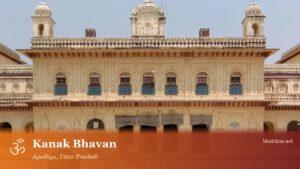 RamaKanak Bhavan, Ayodhya📍 Uttar Pradesh
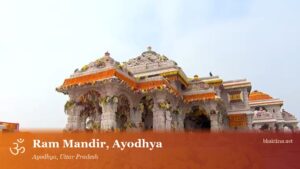 RamaRam Mandir, Ayodhya (Ram Janmabhoomi)📍 Uttar Pradesh
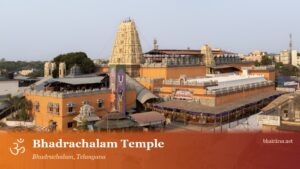 RamaBhadrachalam Sita Ramachandraswamy Temple📍 TelanganaॐRamaBharat Milap Temple, Chitrakoot📍 Madhya PradeshॐRamaKamadgiri (Kamtanath), Chitrakoot📍 Madhya Pradesh
 RamaOrchha Ram Raja Temple📍 Madhya Pradesh