
ॐ
Raghunath Temple, Kullu
Rama • Sultanpur, Kullu, Himachal Pradesh
॥ ॐ श्री रामाय नमः ॥
The Raghunath Temple at Sultanpur is the seat of Kullu’s presiding deity, the form of Rama after whom the entire valley orders its religious life. It grew from an act of royal penance in the seventeenth century, when Raja Jagat Singh placed his kingdom at the feet of Raghunath and chose to rule as the god’s deputy. Each autumn the temple becomes the focal point of Kullu’s famous Dussehra, when the village gods of the valley gather to pay their respects.
The Curse and the King’s Atonement
Local history tells of Raja Jagat Singh, who is said to have wronged a Brahmin and fallen under a curse that brought illness and unrest to his court. On the counsel of a holy man, he sought relief not in conquest but in surrender, vowing to bring the worship of Rama to the heart of his realm.
An idol of Raghunath was carried from Ayodhya to Kullu around the middle of the 1600s and installed at Sultanpur. By dedicating his throne to the deity and governing in the god’s name, the king turned a personal crisis into the founding charter of the valley’s devotion.
A King Who Ruled as the God’s Regent
After the installation, the rulers of Kullu styled themselves not as sovereigns in their own right but as regents acting on behalf of Raghunath, the true lord of the land. This idea reshaped politics and ritual together: decrees and ceremonies alike were framed as the deity’s will.
The arrangement gave the temple an authority beyond the ordinary, since loyalty to the state and devotion to Rama became one and the same. That fusion still colours how the valley regards Raghunath as its sovereign presence.
Architecture and the Image
The temple is built in the Pahari hill idiom, combining a pyramidal tower with the pent-roof timber-and-stone construction typical of Himachal’s shrines. The blend of Shikhara form above and sloping wooden eaves below suits the region’s heavy snow and rain.
Within, the deity is worshipped with daily rites and seasonal festivals, the image of Raghunath treated as the living ruler receiving offerings from his people. The setting at Sultanpur, above the Beas valley, places the temple at the social as much as the spiritual centre of Kullu.
Kullu Dussehra and the Gathering of Gods
Kullu’s Dussehra is unlike the rest of India’s: it begins when most celebrations elsewhere have ended, and its centrepiece is the assembly of hundreds of village deities carried in palanquins to Dhalpur ground. They come to stand before Raghunath, who presides over the festival as the valley’s chief god.
For a week the town fills with processions, music and the murmur of deity-bearers, all ordered around the central image brought out from this temple. The festival makes visible the seventeenth-century settlement in which Rama, as Raghunath, was made lord of Kullu.
Frequently Asked Questions
Who is the presiding deity of Kullu valley?
Raghunath, a form of Rama, is the presiding deity of the Kullu valley. The Raghunath Temple at Sultanpur is his seat, and the valley’s religious calendar, including Kullu Dussehra, centres on him.
Why did Raja Jagat Singh build the Raghunath Temple?
Raja Jagat Singh founded the temple as an act of atonement after falling under a curse. He brought an idol of Raghunath from Ayodhya around the mid-1600s and dedicated his entire kingdom to the deity, ruling thereafter as the god’s regent.
When was the Raghunath Temple established?
The temple dates to around 1660, when Raja Jagat Singh installed the Raghunath idol at Sultanpur in Kullu. The act marked the start of Kullu’s dedication to Rama as its sovereign deity.
What is the connection between the temple and Kullu Dussehra?
Raghunath presides over Kullu Dussehra, the valley’s week-long festival. Hundreds of village gods are carried in procession to Dhalpur ground to stand before the deity brought out from this temple, making it the heart of the celebration.
What architectural style is the Raghunath Temple?
It is built in the Pahari hill style, combining a pyramidal tower with the pent-roof timber-and-stone construction common to Himachal’s mountain temples. The design suits the region’s heavy snow and rainfall.
Where is the Raghunath Temple located?
The temple is at Sultanpur in Kullu town, Himachal Pradesh, above the Beas valley. Kullu is well connected by road, and Bhuntar, the nearest airport, lies a short drive away.
॥ जय श्री राम ॥ • Bhaktiras.net Temple Guide
| Primary Deity | Rama (as Raghunath) |
| Location | Sultanpur, Kullu, Himachal Pradesh |
| Founder | Raja Jagat Singh |
| Established | c. 1660 |
| Idol Origin | Brought from Ayodhya |
| Architecture | Pahari pyramidal and pent-roof style |
| Key Festival | Kullu Dussehra |
| Role | Presiding deity of Kullu valley |
Related Temples
Explore more sacred temples connected by deity and region.
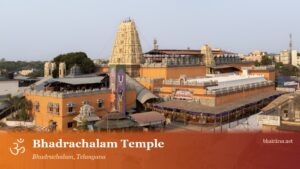 RamaBhadrachalam Sita Ramachandraswamy Temple📍 TelanganaॐRamaBharat Milap Temple, Chitrakoot📍 Madhya PradeshॐRamaKamadgiri (Kamtanath), Chitrakoot📍 Madhya Pradesh
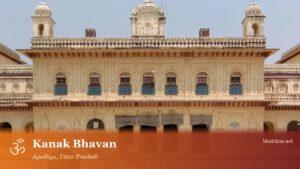 RamaKanak Bhavan, Ayodhya📍 Uttar Pradesh
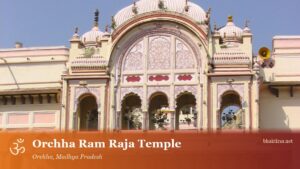 RamaOrchha Ram Raja Temple📍 Madhya Pradesh
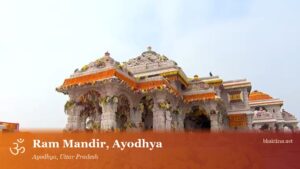 RamaRam Mandir, Ayodhya (Ram Janmabhoomi)📍 Uttar Pradesh