ॐ
Shri Ramnath Temple, Goa
Lord Shiva (Ramnath) • Bandora, Ponda, Goa
॥ ॐ नमः शिवाय ॥
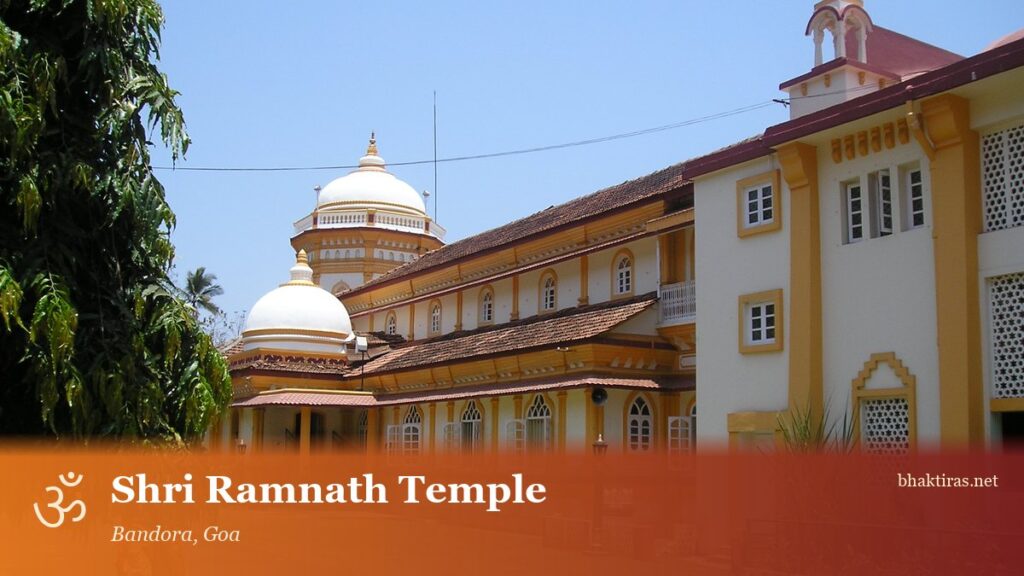
At Bandora near Ponda, the Shri Ramnath Temple enshrines Shiva as Ramnath—the linga that Lord Rama is said to have worshipped, a tradition tied to the lore of Rameswaram. Alongside the linga, the temple honours Lakshmi-Narayan. Its deity was carried here from Salcete during sixteenth-century Portuguese persecution, and the shrine is admired today for its silver-worked hall and tall lamp tower.
Ramnath, the linga Rama worshipped
The presiding deity is Shiva as Ramnath, understood in tradition as the linga venerated by Rama—an association that links this Goan shrine to the famous lore of Rameswaram. Worship of Shiva here is paired with that of Lakshmi-Narayan, joining the Shaiva and Vaishnava streams under one roof.
This dual devotion gives the Ramnath temple a distinctive character among Goa’s shrines, drawing devotees of both Shiva and Vishnu to a single sanctum.
From Salcete to Ponda
The deity originally belonged to the Salcete region—around the Loutolim and Benaulim area—before the upheavals of the sixteenth century. During Portuguese persecution, the image was shifted inland to Bandora in Ponda, a tract that remained outside direct Portuguese control at the time.
Ponda thus became a refuge for several relocated Goan deities, and the Ramnath temple is one of this cluster of shrines re-established there. Its present form reflects rebuilding and patronage after the move.
Darshan and the silver sabhamandap
The temple’s most admired feature is its sabhamandap, the assembly hall, fitted with an ornate silver railing and silver-clad pillars that frame the approach to the sanctum. The silverwork catches the lamplight during worship and sets the tone of the interior.
Worship follows the rhythms of a living Goan temple, with daily puja and aarti. Bandora is a short drive from Ponda town, and the temple is easily visited alongside the other deity shrines of the area.
Goan temple architecture
The Ramnath temple shows the characteristic Goan temple style that developed after the relocations—a domed sanctum, a pillared sabhamandap and, in the forecourt, a tall deepstambha or lamp tower lit on festival nights. This idiom blends older Hindu temple form with regional and European-influenced detail.
Ponda’s concentration of such temples makes it the devotional heart of Hindu Goa.
list
- Silver-railed and silver-pillared sabhamandap
- Tall deepstambha (lamp tower) in the forecourt
- Part of the Ponda cluster of relocated Goan deity temples
Frequently Asked Questions
Which deity is worshipped at the Ramnath Temple in Goa?
The temple enshrines Shiva as Ramnath, the linga that Rama is said to have worshipped, with an association to the lore of Rameswaram. Lakshmi-Narayan is also honoured at the same temple.
Why was the Ramnath deity moved to Ponda?
The deity was shifted from its original home in the Salcete region during sixteenth-century Portuguese persecution. It was relocated inland to Bandora in Ponda, an area that then lay outside direct Portuguese control.
What is special about the Ramnath Temple’s interior?
Its sabhamandap (assembly hall) is noted for an ornate silver railing and silver-clad pillars. The silverwork frames the approach to the sanctum and is the temple’s most admired feature.
Where is the Shri Ramnath Temple located?
The temple is at Bandora, near Ponda in Goa. Ponda holds a cluster of Hindu temples whose deities were relocated there during the Portuguese period.
What is the deepstambha at the temple?
A deepstambha is a tall lamp tower in the temple forecourt, lit during festivals and evening worship. The Ramnath Temple has one as part of its Goan temple architecture.
Is the Ramnath Temple linked to Rameswaram?
Yes, by tradition. The Ramnath linga is associated with the worship of Shiva by Lord Rama, the same devotional theme as the Ramanathaswamy temple at Rameswaram. The Goan shrine carries this lore in its deity’s name.
॥ हर हर महादेव ॥ • Bhaktiras.net Temple Guide
| Primary Deity | Shiva as Ramnath |
| Co-Deity | Lakshmi-Narayan |
| Relocated From | Salcete region |
| Relocation Era | 16th-century Portuguese period |
| Notable Feature | Silver-railed sabhamandap |
| Lamp Tower | Tall deepstambha |
| Style | Goan temple architecture |
| Location | Bandora, Ponda, Goa |
Related Temples
Explore more sacred temples connected by deity and region.