ॐ
Ram Mandir, Ayodhya (Ram Janmabhoomi)
Lord Rama (Ram Lalla) • Ayodhya, Uttar Pradesh
॥ ॐ श्री रामाय नमः ॥
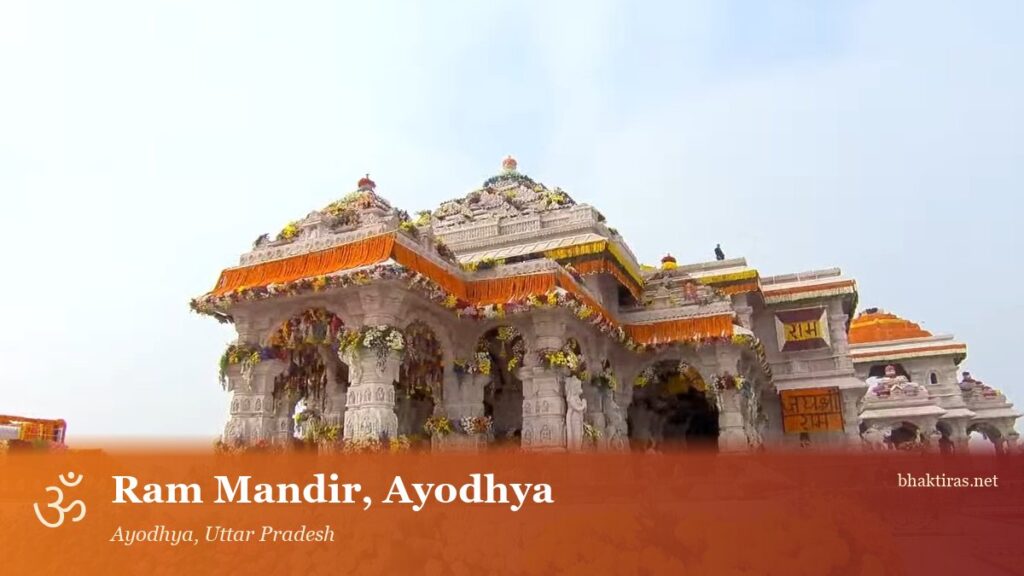
On the banks of the Sarayu in Ayodhya stands the Ram Mandir, built at the site revered as Ram Janmabhoomi—the birthplace of Lord Rama. The temple’s consecration, the Pran Pratishtha, was performed on 22 January 2024, installing the image of Ram Lalla in the sanctum. Raised by the Shri Ram Janmabhoomi Teerth Kshetra Trust in the Nagara style, it ranks among the most significant new temples in India.
Ram Janmabhoomi, the birthplace of Rama
Ayodhya is held in tradition to be the birthplace of Rama, the seventh avatar of Vishnu and hero of the Ramayana, and the temple marks that revered spot as Ram Janmabhoomi. The deity in the sanctum is Ram Lalla, the child form of Rama.
For devotees, the site carries deep devotional and cultural meaning across centuries, and the new temple gives that sentiment a permanent home on the Sarayu.
The 2024 consecration and the building
The Pran Pratishtha, or consecration, of the Ram Mandir was held on 22 January 2024, a ceremony that drew national attention. The temple was built by the Shri Ram Janmabhoomi Teerth Kshetra Trust, the body charged with constructing and managing the shrine.
The design follows the traditional Nagara temple form and was drawn up by the Sompura family of temple architects. Built across three storeys in pink Bansi Paharpur sandstone, it presents carved spires, pillared halls and sculpted entrances in classical idiom.
Darshan and visiting Ayodhya
Pilgrims come for darshan of Ram Lalla, with daily aarti and worship observed at the temple. Given the volume of visitors since the consecration, devotees should check current darshan timings, entry arrangements and any registration before travelling.
Ayodhya is well connected by rail, road and air, and the temple anchors a wider pilgrim circuit along the Sarayu. The river ghats and other shrines of the holy city are easily combined with a temple visit.
The idol, the stone and the Sompuras
The Ram Lalla image in the sanctum was sculpted by Arun Yogiraj, the Mysuru sculptor whose work was chosen for the main deity. The temple’s pink Bansi Paharpur sandstone, quarried in Rajasthan, gives the structure its distinctive warm tone.
The Sompura family’s design continues a long tradition of temple architecture in India.
list
- Deity: Ram Lalla, sculpted by Arun Yogiraj
- Material: pink Bansi Paharpur sandstone, three storeys
- Architects: the Sompura family, Nagara style
Frequently Asked Questions
When was the Ram Mandir in Ayodhya consecrated?
The Pran Pratishtha (consecration) of the Ram Mandir was held on 22 January 2024. The ceremony installed the image of Ram Lalla, the child form of Rama, in the temple sanctum.
Who built the Ram Mandir?
The temple was built by the Shri Ram Janmabhoomi Teerth Kshetra Trust. The design, in the Nagara style, was prepared by the Sompura family of temple architects.
Who made the Ram Lalla idol?
The Ram Lalla image in the sanctum was sculpted by Arun Yogiraj, a sculptor from Mysuru. His carving was selected as the main deity for the new temple.
What is the Ram Mandir built from?
The temple is built in pink Bansi Paharpur sandstone across three storeys, in the traditional Nagara style. The warm-toned sandstone is quarried in Rajasthan.
Where is the Ram Mandir located?
The Ram Mandir stands at the Ram Janmabhoomi site in Ayodhya, Uttar Pradesh, on the banks of the Sarayu river. Ayodhya is well connected by rail, road and air.
What is Ram Janmabhoomi?
Ram Janmabhoomi means ‘birthplace of Rama’ and refers to the site in Ayodhya revered in tradition as where Lord Rama was born. The Ram Mandir is built on this spot.
॥ जय श्री राम ॥ • Bhaktiras.net Temple Guide
| Primary Deity | Ram Lalla (Rama) |
| Consecration | 22 January 2024 |
| Built By | Shri Ram Janmabhoomi Teerth Kshetra Trust |
| Architects | Sompura family |
| Architecture | Nagara, three storeys |
| Material | Pink Bansi Paharpur sandstone |
| Idol Sculptor | Arun Yogiraj |
| Location | Ayodhya, Uttar Pradesh |
Related Temples
Explore more sacred temples connected by deity and region.