
ॐ
Srikalahasti Temple (Vayu Linga)
Shiva as Vayu Linga • Srikalahasti, Tirupati district, Andhra Pradesh
॥ ॐ नमः शिवाय ॥
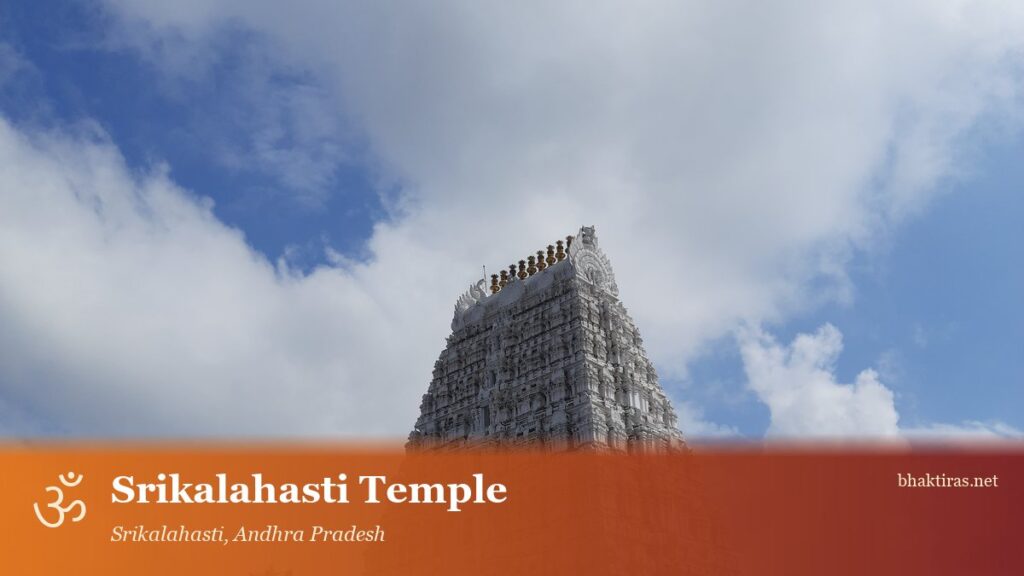
Srikalahasti Temple, on the banks of the Swarnamukhi river near Tirupati, enshrines Shiva as the Vayu Linga—the element of air among the five Pancha Bhoota Stalams of South India. The lamp in the inner sanctum is seen to flicker although no breeze reaches it, a sign devotees take as the presence of the wind element, and the temple is the foremost place for Rahu-Ketu and Sarpa Dosha remedies.
The Air Linga and Its Meaning
Among the Pancha Bhoota Stalams, where Shiva is worshipped as the five elements, Srikalahasti represents air. The sanctum lamp is observed to waver and flutter even when the chamber is still, and priests do not touch the linga directly during worship, treating it as the formless air element made present.
This identity sets the temple apart from its companions at places like Chidambaram (space), Tiruvanaikaval (water), Thiruvannamalai (fire) and Kanchipuram (earth), and pilgrims often visit the group as a set to complete the circle of the elements.
The Name and Its Legends
The name Sri-Kala-Hasti is read as the union of three devotees who worshipped the linga—Sri the spider, Kala the serpent and Hasti the elephant—each offering worship in its own way until they attained grace. Their story is told on the temple walls and is central to the site’s identity.
The temple is also tied to Kannappa Nayanar, the hunter-saint whose unschooled but total devotion—offering his own eyes to the linga—is among the most celebrated in the Tamil-Telugu Shaiva tradition, and his shrine is venerated nearby.
Rahu-Ketu and Sarpa Dosha Pujas
Srikalahasti is the pre-eminent centre for Rahu-Ketu and Sarpa Dosha remedies, drawing pilgrims who seek relief from afflictions read in their birth charts. The temple conducts these pujas at scheduled times through the day.
Because demand is high, devotees usually arrive early, take a dip or sprinkling from the Swarnamukhi, and book the ritual through the temple’s counters before joining the queue for the sanctum.
- Rahu-Ketu Sarpa Dosha puja
- Bath or sprinkling from the Swarnamukhi river
- Darshan of the air Vayu Linga
Architecture and Visiting
The complex is marked by a tall Rajagopuram and halls built in the Vijayanagara period, set against the hill that rises behind the river. The layout leads worshippers through pillared mandapas toward the cave-like sanctum where the air linga is housed.
The temple lies close to Tirupati, so many pilgrims combine it with the Venkateswara temple at Tirumala. Mornings are best for the elemental pujas, and modest dress and removal of footwear are required within the precincts.
Frequently Asked Questions
Why is Srikalahasti called the Vayu Linga temple?
Srikalahasti represents air among the five Pancha Bhoota Stalams, where Shiva is worshipped as the five elements. The proof devotees cite is the sanctum lamp, which flickers even though no breeze reaches it, taken as the presence of the wind element.
What does the name Srikalahasti mean?
The name combines three devotees who worshipped the linga: Sri the spider, Kala the serpent and Hasti the elephant. Each is said to have offered worship in its own way and attained grace, and their story gives the temple its name and its legend.
Why do people go to Srikalahasti for Rahu-Ketu puja?
Srikalahasti is the foremost centre for Rahu-Ketu and Sarpa Dosha remedies, performed for afflictions read in a person’s birth chart. The temple conducts these pujas through the day, and pilgrims often book the ritual at the counters before darshan.
Who was Kannappa Nayanar?
Kannappa Nayanar was a hunter-saint linked to Srikalahasti whose intense, untutored devotion led him to offer his own eyes to the linga. His story is among the most revered in the Shaiva saint tradition, and a shrine to him is venerated at the temple.
Where is Srikalahasti Temple located?
The temple stands on the banks of the Swarnamukhi river at Srikalahasti in Tirupati district, Andhra Pradesh, near Tirupati. Many pilgrims combine it with the Venkateswara temple at nearby Tirumala.
What are the temple’s architectural highlights?
The temple is marked by a tall Rajagopuram and pillared halls built during the Vijayanagara period, set against the hill behind the river. Worshippers pass through these mandapas to reach the cave-like sanctum that houses the air linga.
॥ हर हर महादेव ॥ • Bhaktiras.net Temple Guide
| Primary Deity | Shiva (Vayu Linga) |
| Location | Srikalahasti, Tirupati district |
| State | Andhra Pradesh |
| River | Swarnamukhi |
| Classification | Pancha Bhoota Stalam (Air) |
| Known For | Rahu-Ketu Sarpa Dosha puja |
| Architecture | Vijayanagara-era halls, tall Rajagopuram |
| District | Tirupati |
Related Temples
Explore more sacred temples connected by deity and region.
 ShivaKapileswara Swamy Temple, Tirupati📍 Andhra Pradesh
 ShivaLepakshi Veerabhadra Temple📍 Andhra Pradesh
 ShivaMallikarjuna Jyotirlinga Temple📍 Andhra Pradesh
 Shiva108 Shiva Temple, Kalna (Nava Kailash)📍 West Bengal
 ShivaAiravatesvara Temple, Darasuram📍 Tamil Nadu
 ShivaAlampur Nava Brahma Temples & Jogulamba📍 Telangana