ॐ
Vishnupad Temple, Gaya
Lord Vishnu (Vishnupada footprint) • Gaya, Bihar
॥ ॐ नमो नारायणाय ॥
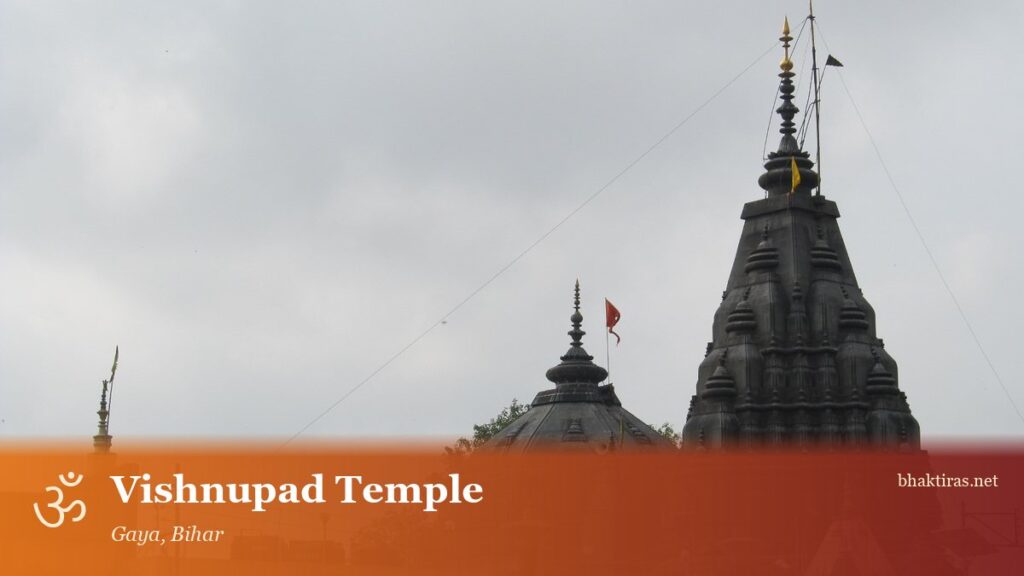
On the bank of the Falgu river in Gaya, the Vishnupad Temple enshrines a 40-centimetre footprint said to have been pressed into rock by Lord Vishnu himself. The present black-stone shrine was rebuilt in 1787 by Ahilyabai Holkar, and it remains the central destination for Hindus performing Pind Daan rites for their ancestors. Few sites in Bihar carry such weight in the rituals of the dead.
The Footprint of Vishnu
The temple takes its name from the Vishnupada, a roughly 40-centimetre footprint of Vishnu set into a block called the Dharmashila. Tradition links the impression to the legend of Vishnu subduing the demon Gayasura, whose body was pinned beneath the holy ground of Gaya.
The footprint is the object of darshan rather than a sculpted idol, marked with the conch, discus and other auspicious symbols of Vishnu. Worshippers circle the Dharmashila and offer prayers at the silver-plated octagonal basin that frames it.
The 1787 Reconstruction
While Gaya’s sanctity as a shraddha site is ancient, the building seen today dates to 1787, when the Maratha queen Ahilyabai Holkar of Indore commissioned its reconstruction. Her patronage of Hindu shrines across India left Gaya with one of its most enduring landmarks.
The shrine rises to about thirty metres as an octagonal tower of dark, polished stone, its tiered form visible across the riverside quarter. The dressed black masonry gives the temple a sober, weighty presence well suited to its role in ancestral rites.
Pind Daan and Pitru Paksha
Vishnupad is the pre-eminent place in India for Pind Daan, the offering of rice balls and water that releases ancestors toward liberation. During the fortnight of Pitru Paksha, lakhs of pilgrims arrive to perform shraddha for their forebears on the Falgu bank.
Priests known as Gayawals guide families through the multi-stage ritual, which often spans several sacred spots in and around Gaya. Completing the rites at the Vishnupada footprint is considered the culmination of the ancestral pilgrimage.
Visiting the Temple
The temple stands beside the Falgu, a river famous for running dry on the surface for much of the year while water flows beneath the sand. Pilgrims traditionally bathe or perform tarpan here before entering for darshan.
Access to the inner sanctum has historically been restricted, with non-Hindus permitted only to the courtyard. Visitors should dress modestly, follow priest guidance during ritual seasons and expect dense crowds throughout Pitru Paksha.
Frequently Asked Questions
What is enshrined in the Vishnupad Temple?
The Vishnupad Temple enshrines a 40-centimetre footprint of Lord Vishnu, called the Vishnupada, set into a rock known as the Dharmashila. It is worshipped in place of an idol. Tradition connects the footprint to Vishnu pinning down the demon Gayasura.
Who built the present Vishnupad Temple?
The present temple was built in 1787 by Ahilyabai Holkar, the Maratha queen of Indore. Gaya had long been a sacred site, but she commissioned the black-stone structure seen today. Its octagonal tower rises about thirty metres.
Why is Gaya important for Pind Daan?
Gaya is the foremost site in India for Pind Daan, the rite that helps ancestors attain liberation. Hindus believe offerings made at the Vishnupada footprint are especially powerful for the dead. The fortnight of Pitru Paksha draws lakhs of pilgrims for this purpose.
Which river flows beside the Vishnupad Temple?
The Falgu, also spelled Phalgu, flows beside the Vishnupad Temple. It is known for being dry on the surface for much of the year, with water moving beneath the sandy bed. Pilgrims perform tarpan and bathing rituals on its bank.
Can non-Hindus enter the Vishnupad Temple?
Historically, non-Hindus have been restricted to the temple courtyard and not permitted into the inner sanctum. Practices can change, so visitors should check locally and respect the rules in force. Modest dress and quiet conduct are expected of all guests.
When is the best time to visit Vishnupad Temple?
The temple is open year-round, but Pitru Paksha, the fortnight devoted to ancestors, is the most significant time and falls in September or October. Crowds are heaviest then. Those wanting a calmer darshan may prefer the winter months outside the shraddha season.
॥ जय श्रीमन्नारायण ॥ • Bhaktiras.net Temple Guide
| Primary Deity | Vishnu (Vishnupada footprint) |
| Sacred Relic | 40 cm footprint on Dharmashila rock |
| River | Falgu (Phalgu) |
| Rebuilt | 1787 by Ahilyabai Holkar |
| Tower | ~30 m octagonal black stone |
| Primary Rite | Pind Daan / Pitru Paksha shraddha |
| Location | Gaya |
| State | Bihar |
Related Temples
Explore more sacred temples connected by deity and region.