
ॐ
Kamakhya Devi Temple
Maa Kamakhya · Nilachal Hill, Guwahati, Assam
॥ ऐं ह्रीं क्लीं कामाख्यायै नमः ॥
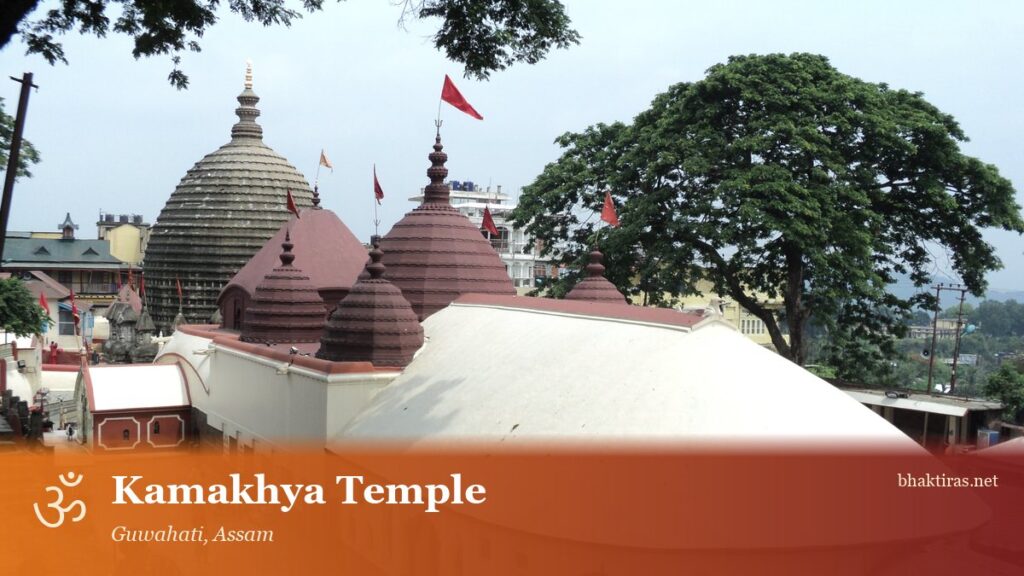
Kamakhya is a Shakti Peetha on Nilachal Hill in Guwahati, Assam, and the foremost of the 51 sites where parts of Goddess Sati are believed to have fallen. The shrine holds no carved idol — worship centres on a natural rock cleft inside a cave, kept perpetually moist by an underground spring. This yoni peetha marks the spot where Sati’s yoni fell, which is why Kamakhya is regarded as the most concentrated seat of Shakti in the subcontinent and the heart of tantric practice in eastern India.
What makes Kamakhya different from other Shakti Peethas
Of the 51 Shakti Peethas spread across the subcontinent, Kamakhya holds a distinct place in both geography and ritual. Where most peethas enshrine a sculpted form of the Goddess, Kamakhya offers no image at all. The primary object of worship is a yoni-shaped fissure in the rock inside a natural cave beneath the main temple, kept wet by a subterranean spring. A living geological feature rather than a crafted object, it is unlike any other major pilgrimage site in India.
The tantric weight runs deeper than iconography. The yoni, in shakta cosmology, represents the generative power of the universe, so Kamakhya is not simply a temple where Devi is worshipped — it is a place where shakti is held to be present in its most fundamental, unmediated form. This is why the hill became the centre of the Kaula tantric lineage in Assam, whose practitioners continue their rites here.
A temple rebuilt by the Koch kings
Worship on Nilachal Hill is documented from at least the 8th century, when early inscriptions describe an active shrine. The medieval centuries brought disruption: the structure was razed in the 16th century during Kalapahar’s campaigns, and the site stood without a working temple for decades. The Koch king Naranarayan rebuilt it in 1565 CE, and it is largely that reconstruction, with later additions, that pilgrims see today.
The Nilachal architectural style
Kamakhya is the leading example of the Nilachal style, specific to Assam, which fuses three regional traditions. The garbhagriha carries an anda dome — a rounded, beehive-shaped shikhara drawn from Buddhist stupa proportions. The attached mandapas use the Bengali chala form, with a curved roof built to shed heavy monsoon rain. Older walls hold terracotta panels with devotional and erotic imagery, a standard part of tantric temple programmes across eastern India. A staircase descends from the main structure into the cave sanctum, where the yoni peetha sits in near-darkness, lit by oil lamps and daily offerings.
Ambubachi Mela — when the temple closes
Each June, Kamakhya hosts Ambubachi Mela, among the most singular religious gatherings in India. The festival marks a three-day period during which, by tradition, the Goddess menstruates, and the temple closes completely. When it reopens on the fourth day, tantric sadhakas, wandering ascetics including Aghoris, and lay devotees camped across the hill perform rites observed here for centuries.
The prasad carries particular value in shakta tradition: pilgrims receive a small piece of cloth said to hold the energy of the three closed days, kept at home as a protective object. The Brahmaputra shows a reddish tint in this season, which geologists attribute to iron-rich soil stirred by early monsoon rain and devotees read as the river joining the Goddess’s cycle. Guwahati’s rooms fill two to three months ahead, so book early if you plan to attend.
Darshan timings and what to expect inside
Darshan runs in three daily sessions — roughly 5:30 AM to 1:00 PM, 2:30 PM to 5:30 PM, and 7:00 PM to 9:30 PM (timings shift seasonally, so verify before travelling). Weekday mornings before 8 AM see the shortest queues; weekends and festival days can mean two to three hours at the main line, and a priority darshan token is sold at the counter for a fee.
Photography is not allowed inside the sanctum or the cave. Footwear comes off at the main gate. The descent into the cave is steep and narrow — use the side railing. Inside, the ceiling is low and the chamber dark; the yoni peetha sits at the far end under vermillion and flowers. Priests apply tilak after darshan, which lasts two to three minutes at busy times. Leave valuables at the cloakroom near the entrance.
How to reach Kamakhya Temple
- By road: about 9 km from Guwahati city centre (Paltan Bazaar), 20–30 minutes by cab or shared tempo; a paved road runs up the hill to the gate.
- By train: Kamakhya Junction, on the Northeast Frontier Railway, sits at the base of Nilachal Hill — one of the few major temples in India directly served by its own station.
- By air: Lokpriya Gopinath Bordoloi International Airport (LGB), Guwahati, is about 22 km away by road.
Tips for your visit
- Weekday mornings are calmest; avoid the Ambubachi week in June unless you specifically want the festival.
- The cave climb is steep — wear shoes you can slip off quickly and hold the railing on the descent.
- Book Guwahati accommodation well ahead for June; the city fills months before Ambubachi.
- Pair the visit with the smaller Dasha Mahavidya shrines on the same hill, dedicated to the ten tantric goddesses.
Frequently Asked Questions
Is Kamakhya Temple one of the 51 Shakti Peethas?
Yes. Kamakhya is the foremost among the 51 Shakti Peethas and carries the designation of Maha Peetha. It marks the site where the yoni of Goddess Sati is said to have fallen after Vishnu’s Sudarshana Chakra dismembered her body, making it the most sacred seat of Shakti in the tantric tradition.
Why is there no idol in Kamakhya Temple?
Worship centres on a natural rock cleft, the yoni peetha, inside a cave beneath the main sanctum rather than a sculpted image. The fissure stays perpetually moist from an underground spring. In shakta and tantric tradition this natural formation is itself the living presence of the Goddess, so a carved idol is unnecessary.
What is Ambubachi Mela and when does it take place?
Ambubachi Mela is an annual festival in June (usually June 22–26) marking the period when the Goddess is believed to menstruate. The temple closes for three days and reopens to a mass gathering of tantric practitioners, ascetics and pilgrims from across India — one of the largest tantric congregations in the world.
How do I reach Kamakhya Temple from Guwahati city?
The temple is about 9 km from Guwahati city centre, 20–30 minutes by auto or app cab. Kamakhya Junction on the Northeast Frontier Railway sits at the base of Nilachal Hill, and Guwahati Airport (LGB) is about 22 km away by road.
What is the Nilachal architectural style?
Nilachal is a regional style specific to Assam, with a beehive-shaped shikhara derived from Buddhist stupa proportions combined with Bengali chala-style mandapas with curved roofs. Kamakhya is its most prominent surviving example, blending three distinct regional traditions in one structure.
Can visitors of all faiths enter Kamakhya Temple?
Yes. The main darshan is open to visitors of all backgrounds, with access to the cave sanctum and prasad for all. The exception is certain rites performed by tantric practitioners in restricted spaces; the primary pilgrimage route and darshan queue carry no restriction on entry.
॥ जय माँ कामाख्या ॥ • Bhaktiras.net Temple Guide
| Temple Name | Kamakhya Devi Temple |
| Primary Deity | Goddess Kamakhya (Sati) |
| Location | Nilachal Hill, Guwahati |
| State | Assam, India |
| Significance | Foremost of 51 Shakti Peethas |
| Architecture | Nilachal style, beehive shikhara |
| Built | Rebuilt c. 1565 CE (Koch dynasty) |
| Key Festival | Ambubachi Mela (June) |
| River Nearby | Brahmaputra |
| Special Feature | Yoni peetha — natural cleft, no idol |
| Darshan | 5:30 AM – 9:30 PM (sessions) |
| Nearest Railhead | Kamakhya Junction |
| Coordinates | 26.1664° N, 91.7048° E |
| Entry | Free (priority token paid) |